Buying a G-Body: 15 Inspection Questions Before You Commit
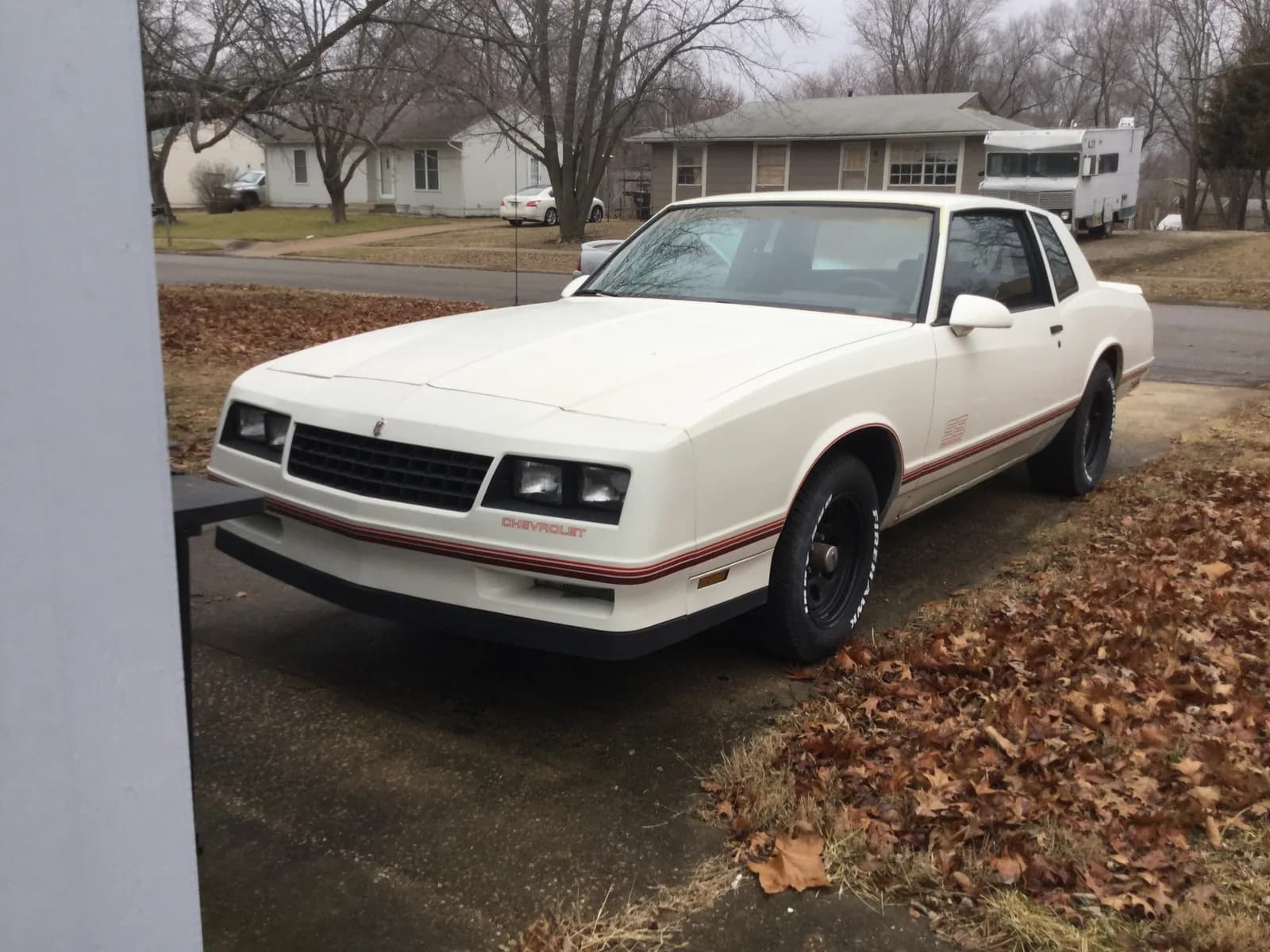
Representative 1987 Chevrolet Monte Carlo SS. This photograph provides model context and does not document a WhipKingz purchase, inspection or test.Photo: Commander Keryev · CC BY-SA 4.0Resized and displayed with a crop for this layout.
The short answer: buy the car only after you verify what it is, inspect the body and frame on a lift, test it from cold, and price every unfinished or questionable modification. A glossy G-body with a loud exhaust can still hide rust, wiring trouble, weak brakes, a tired transmission, or wheels that treat the fenders like a cheese grater.
This checklist is designed for the person standing in a driveway trying to decide whether a Chevrolet Monte Carlo, Oldsmobile Cutlass, Buick Regal, Pontiac Grand Prix, Chevrolet Malibu, or Chevrolet El Camino deserves a deposit. It is an editorial inspection framework, not a factory service procedure. A qualified mechanic and body shop should make the final call on a serious purchase.
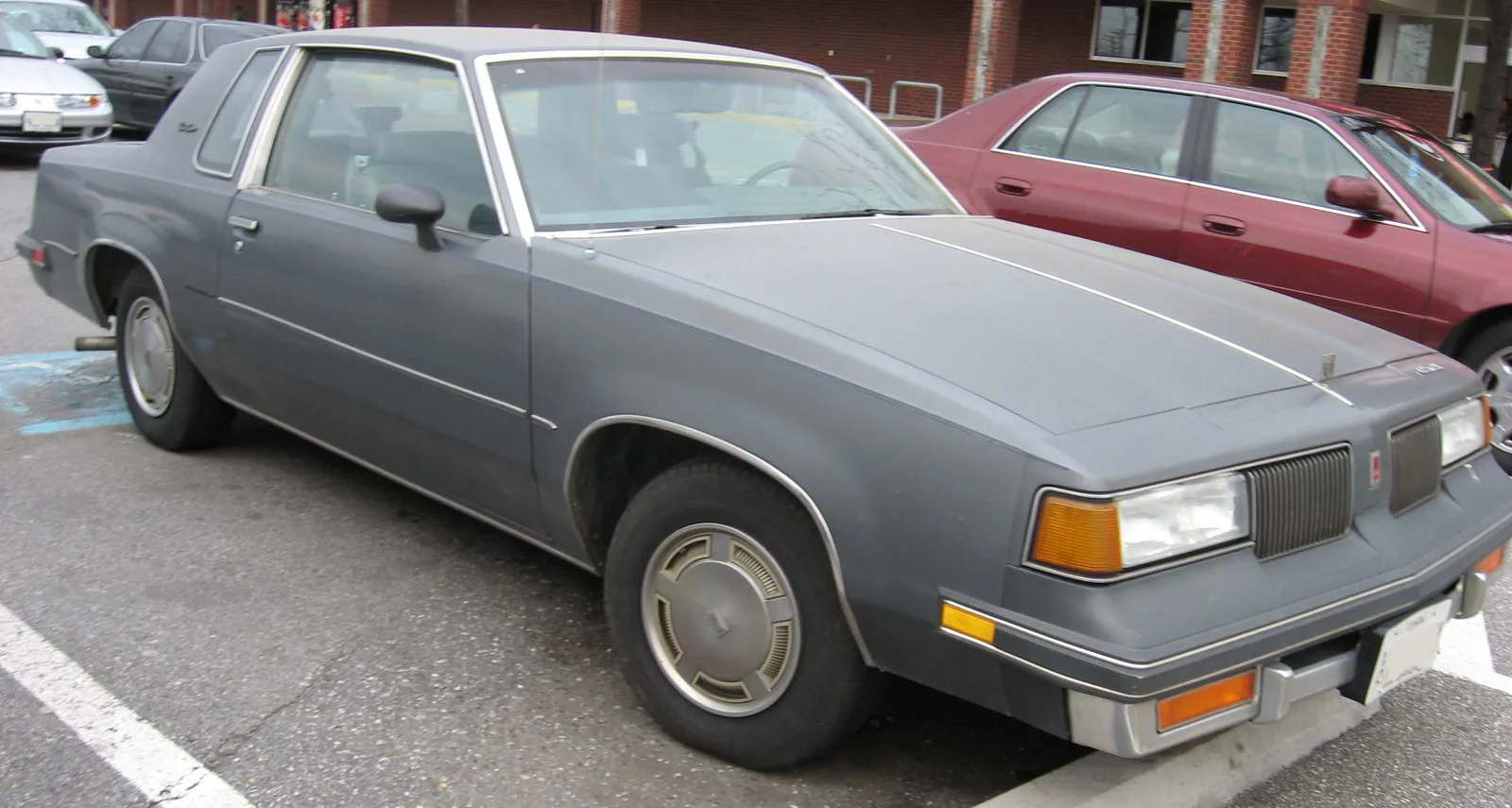 Representative 1987 Oldsmobile Cutlass Supreme coupe. Photo: IFCAR, released to the public domain. Resized and compressed with full framing preserved.

First, make sure “G-body” means the car you think it means
This guide uses G-body precisely for GM's 1982–1988 rear-wheel-drive G designation. The closely related 1978–1981 cars began as GM A-bodies, although sellers and parts conversations often group the whole 1978–1988 family together. That shorthand is useful at a cruise-in and risky at a parts counter.
Write down the exact year, make, model, body style, engine, transmission, and VIN before ordering anything. GM's Vehicle Information Kits include period Chevrolet material by model year, while the NHTSA VIN decoder can decode a 17-character VIN. Neither resource authenticates an individual car's current equipment, so compare the paperwork with the vehicle itself.
If you are still choosing a direction, WhipKingz's restoration, restomod, and full-custom guide can help you decide how much originality should matter to your purchase.
1. Does the VIN match the title and the car?
Ask the seller to show you the title before you get emotionally attached. Compare the VIN on the title with the VIN visible through the windshield and any other factory identification locations appropriate to that exact model and year. Confirm the seller's legal name, whether there is a lien, and whether the title is branded, rebuilt, salvage, or otherwise restricted.
A mismatch is not a “we'll sort it out later” detail. Pause until the seller produces a clean, explainable paper trail that your state will accept.
2. What exactly is the seller claiming the car is?
Words such as SS, 442, Grand National, Hurst/Olds, Aerocoupe, and GNX can change both the price and the cost of being wrong. Ask for documents supporting any rare trim, drivetrain, or limited-production claim. Then verify model-year-specific identifiers with authoritative records or a specialist who knows that model.
Badges, spoilers, wheels, dashboards, and engine parts are replaceable. They may make a convincing tribute, but they are not proof of factory identity. A tribute can still be a great buy when it is represented and priced honestly.
3. Can you inspect the frame and body mounts on a lift?
The most important view of an old car is usually the one nobody posts in the listing. Arrange a lift inspection and look for rust perforation, heavy scaling, crushed or patched rails, distorted mounting points, fresh undercoating over suspicious texture, and body mounts that have collapsed or pulled through weakened metal.
Pay particular attention around suspension pickup points, crossmembers, rear frame sections, and any area where a repair changes the shape or thickness of the structure. Surface oxidation and structural loss are not the same problem. If you cannot tell which one you are seeing, bring a body technician who can.
4. Where is the body hiding rust or old collision work?
Inspect lower fenders, door bottoms, quarter panels, wheel openings, trunk floor, spare-tire well, floor pans, windshield and back-glass channels, and the seams around any vinyl roof. Look for ripples in reflections, overspray on seals, mismatched fasteners, seam sealer that differs side to side, thick filler, and paint shades that change between panels.
A repaired quarter panel is not automatically a deal-breaker. The real questions are whether the repair is structurally sound, whether water can enter, and whether you are paying restored-car money for shortcut work.
5. Is water getting into the cabin or trunk?
Smell the interior before the seller airs it out. Lift removable carpet edges and trunk mats. Check headliner edges, package tray, kick panels, seat mounts, and wiring connectors for stains, corrosion, mildew, or damp padding.
Water intrusion can create several bills at once: glass-channel repair, rust repair, upholstery work, and intermittent electrical faults. A dry day does not prove a dry car, so ask when it last sat outside in rain and whether the windshield, back glass, door seals, or heater box have been resealed.
6. Do the wheels and tires actually fit through the full range of motion?
Turn the steering from lock to lock while the car is stationary, then repeat your observation with the suspension loaded during a careful road test. Check inner wheel wells, frame edges, sway bars, brake hoses, quarter lips, and tire sidewalls for polished spots or fresh cuts. Ask for wheel diameter, width, offset or backspacing, tire size, spacer thickness, and stud length.
Oversized wheels can look right and still create poor clearance, limited steering, overloaded hardware, or an inaccurate speedometer. Read the tire date code and inspect for cracking, bulges, uneven wear, and repairs. Our classic-car tire age guide explains why tread depth alone does not settle the question.
7. What was changed in the suspension and steering?
Ask for a complete parts list: springs, control arms, bushings, ball joints, steering box, tie rods, sway bars, shocks, drop spindles, air suspension, frame notches, and reinforcement work. Then ask who installed it and whether an alignment sheet exists.
On the road, watch for wandering, delayed steering response, bump steer, clunks, a steering wheel that does not return naturally, or a car that sits differently from side to side. Modified does not mean bad; undocumented geometry is the concern.
8. Can the brakes stop the car straight, repeatedly, and without drama?
Inspect hard lines, flexible hoses, master cylinder, booster, proportioning hardware, calipers or wheel cylinders, rotors or drums, and parking brake. Ask whether the axle and brake package still match the master cylinder and proportioning setup.
During a safe test drive, the pedal should not sink, pulse severely, require pumping, or pull the car sharply. A seller saying “it just needs bleeding” is a diagnosis you should verify, not accept as a discount coupon.
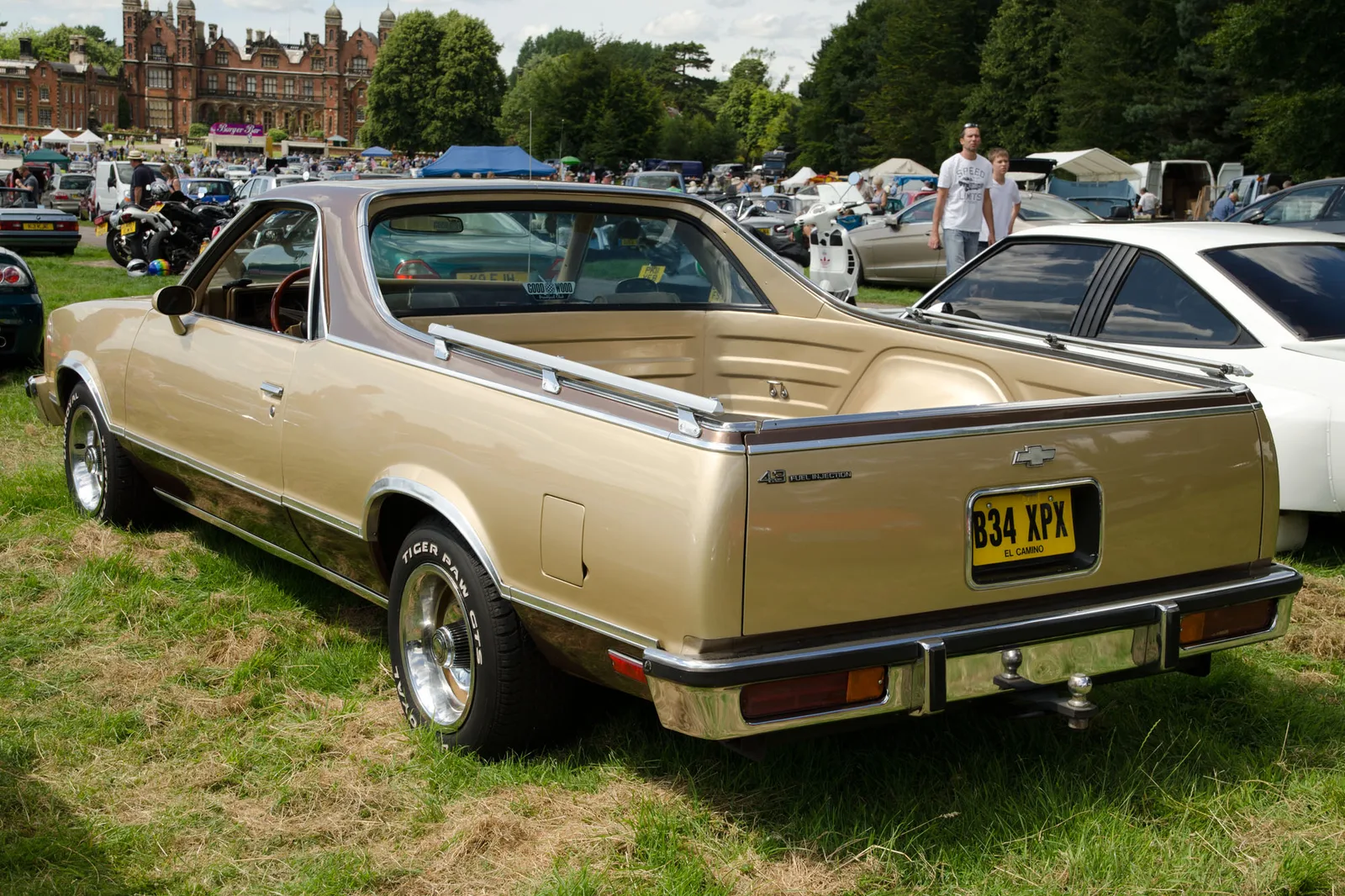 Representative 1985 Chevrolet El Camino, included to show the coupe-utility body style in the G-body family. Photo: Steve Glover, CC BY 2.0. Resized and compressed with full framing preserved.
_-_15727968685.jpg)
9. Will the seller let you hear a truly cold start?
Ask the seller not to start the car before you arrive. Touch the upper radiator hose cautiously to confirm the engine is cold. Watch how quickly it starts, how oil pressure behaves if a trustworthy gauge is present, whether smoke appears, and whether knocks, ticks, squeals, or exhaust leaks change as the engine warms.
Identify the engine by castings, stampings, receipts, and installed components—not by the air-cleaner decal. If the engine was rebuilt or swapped, ask for the machine-shop invoice, internal parts list, compression ratio, camshaft specification, fuel requirement, and tune information.
10. Does the cooling system control temperature at idle and on the road?
Inspect the radiator, cap area, hoses, fan, shroud, water pump, overflow system, heater core area, and coolant for leaks or improvised routing. Let the car idle long enough to reach operating temperature, then road-test it and observe whether the temperature remains stable.
An aluminum radiator or electric fan is not proof the system is sorted. Ask how the fan is triggered, whether a relay and fuse protect the circuit, and whether the gauge reading has been checked against a known-good measurement.
11. How do the transmission, rear axle, and driveline behave?
Check fluid condition and leaks where appropriate, then test engagement from park into drive and reverse. Under light and moderate throttle, watch for delayed engagement, flare between shifts, slipping, harshness, vibration, or noises that change with load.
Ask which transmission and rear axle are installed, what gear ratio is present, whether a limited-slip unit was added, and whether the speedometer was corrected. On a swapped car, verify driveshaft length, yoke engagement, crossmember placement, cooler-line routing, and operating angles with a qualified shop.
12. Who wired the engine, fuel system, audio, lights, and accessories?
Open the hood and look under the dash. Good work is supported, fused, protected from heat and abrasion, and documented. Be cautious around household wire connectors, unfused battery feeds, loose grounds, twisted-and-taped splices, fuel hose near exhaust, and relays hanging by their wires.
Test every switch and accessory: exterior lights, turn signals, wipers, horn, windows, locks, HVAC blower, gauges, charging system, radio, amplifiers, and air-suspension controls if equipped. One dead accessory may be simple. Five unrelated dead accessories often point to a project that needs diagnosis, not just parts.
13. What happens on a complete road test?
Drive at neighborhood speed, steady cruise, and highway speed if the car is safe and legally equipped. Include turns in both directions, gentle braking, moderate acceleration, a rough patch of pavement, and a hot restart. Listen with the audio system off.
Note whether the car tracks straight, the steering stays consistent, the brakes repeat their performance, the engine maintains temperature, and vibrations change with speed or engine rpm. If the seller will not allow a reasonable test or independent inspection, value the car as an unknown—or walk away.
14. Which claims are backed by records?
Ask for parts receipts, installation invoices, alignment sheets, engine or transmission build documents, paint and body photos, ownership records, manuals, spare keys, and the old parts included with the sale. Match major receipts to the installed components and confirm that warranties, if any, are transferable.
Receipts do not make a build perfect, but they make the scope easier to understand. “About $40,000 invested” is not a specification. A dated invoice naming the part, installer, and vehicle is useful evidence.
15. Will an independent specialist put the findings in writing?
The Federal Trade Commission's used-car guidance recommends an independent mechanical inspection and a written report with repair-cost estimates; it also warns that a vehicle-history report is not a substitute for that inspection. Those principles are useful whether the seller is a dealer or a private party.
Choose a shop that understands older rear-wheel-drive GM cars and the modifications actually present. For visible rust, paint, or collision concerns, add a body-shop inspection. Ask the inspector to separate safety needs, near-term reliability work, cosmetic issues, and optional upgrades.
Turn the inspection into a real purchase budget
Do not spend your entire budget on the seller's number. Divide the decision into three buckets:
- Purchase and paperwork: agreed price, tax, title, registration, transport, and insurance.
- Immediate safety and reliability: tires, brakes, steering, leaks, cooling, fuel-system repairs, and wiring corrections.
- Your build plan: wheels, stance, power, paint, interior, or audio after the car is safe and dependable.
Get written estimates for known work and add a contingency for problems that cannot be fully diagnosed before disassembly. WhipKingz's build calculator can organize those categories, but the numbers should come from current quotes for this exact car—not a social-media build total from three years ago.
Red flags, yellow flags, and green flags
Red flags: identity or title mismatch, dangerous structural repairs, severe rust at mounting points, fuel leaks, badly compromised brakes or steering, or a seller who blocks an independent inspection. These can justify walking away regardless of the paint.
Yellow flags: incomplete records, old tires, small leaks, tired bushings, nonworking accessories, poor wheel clearance, or modifications that need correction. These are negotiating items only after a shop defines the scope.
Green flags: consistent identity and paperwork, cold-start access, clean structural inspection, stable temperature, predictable road manners, documented modifications, and a seller comfortable with third-party review. Green flags reduce uncertainty; they do not eliminate the need for a reserve fund.
Five common G-body buying mistakes
- Paying for a trim badge before verifying the car.
- Inspecting paint in poor light but never seeing the underside.
- Assuming new wheels, an engine swap, or fresh upholstery means the supporting systems were upgraded correctly.
- Skipping the cold start and only driving around the block.
- Negotiating the purchase price without pricing the first round of repairs.
The best G-body is not automatically the cheapest, most original, or most modified example. It is the car whose identity, condition, and unfinished work you understand well enough to price honestly. If the inspection produces more questions than answers, keep your deposit in your pocket. There will be another car.
Want to compare this checklist with the rest of the scene? Browse WhipKingz's classic-car coverage.
Sources
- General Motors Vehicle Information Kits, accessed October 13, 2026.
- National Highway Traffic Safety Administration VIN Decoder, accessed October 13, 2026.
- Federal Trade Commission: Buying a Used Car From a Dealer, accessed October 13, 2026.
SHARE THIS ARTICLE
Written by
WhipKingz Editorial
Bringing you the best of car culture from around the world.